
READING IMPROVEMENT
You need the right tools for the job.
If your child’s visual tools aren’t working properly, the job of
reading will be much harder than it needs to be.
An assessment can help determine if vision therapy can help
We provide a fun atmosphere where kids won’t feel
self-conscious if they are having a hard time with reading.
Our program consists of exercises for the brain and the
muscles that control eye movement and coordination.
Our goal is to have your child graduate from our program with improved visual tools and renewed confidence in their ability to succeed.
Our program’s track record is excellent, both in results,
and in providing a genuinely caring and fun process.
POSITIVE
REVIEWS
“We learned so much during our assessment.”
“The sports tie-in helped my daughter not feel self-conscience about needing vision therapy for her reading”
“Josh is great at making kids feel comfortable.”
“We always thought our child’s vision was fine because he didn’t need glasses.”
“My son asked immediately when he could come back.”
“We learned so much during our assessment.”
CLICK TO LEARN MORE
Imagine trying to read and your eyes don’t go where you ask them to go.
This child is following a target in a circular pattern. His eyes eyes skip ahead and cut corners….
He’s not trying to do this.
EYE MOVEMENTS
BEFORE VISION THERAPY
AFTER VISION THERAPY
Below, you can see how drastically different reading is through the eyes of two readers.
Smooth eye movements allow the reader to move from word to word with ease, while the other reader struggles to find the next word and the beginning of the next line.
CONVERGENCE
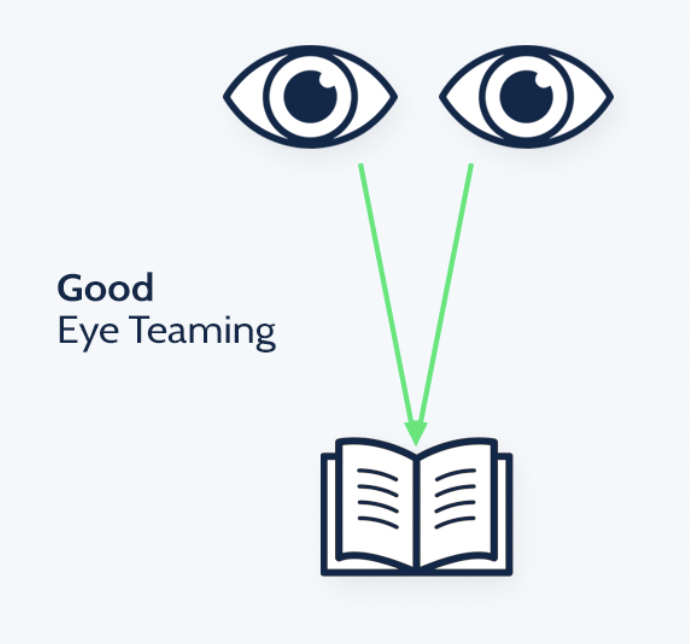
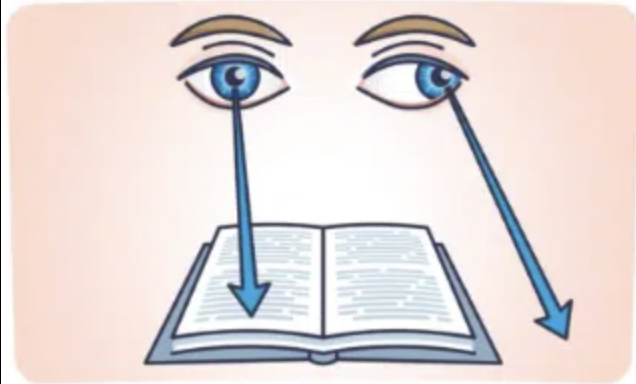
When reading, the eyes must turn inward to meet at each word on the page.
This is called convergence.
Some children have difficulty or the inability to physically get their eyes into, or to maintain, this position. If one or both eyes tend to revert to a relaxed, outward posture, the brain may receive conflicting images (floating, moving words… double vision…) This can also create physical symptoms, such as headaches and eye-strain.
In addition, behavioral issues can sometimes be linked to difficulties with convergence. If reading is physically uncomfortable, frustrating, or both… it may lead to restlessness, avoidance or distractibility.